Fernando Vivanco

Methodological foundations

Bringing awareness, to learn to observe yourself.
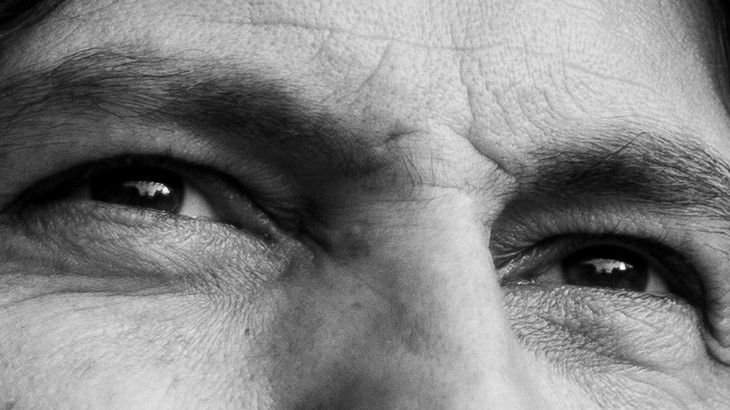
Black-and-white close-up of Fernando Vivanco's gaze

I work from a humanistic approach that goes beyond the cognitive and the behavioural, and also seeks to include the spiritual dimension of each person.

I am a member of the “Union de Professionnels Conseiller Conjugal et Familial” (union of marriage and family counsellors) in Belgium. I therefore subscribe to and abide by its code of ethics, so as to offer therapeutic support with the utmost respect for the dignity of the person and their rights, and worthy of the trust they place in me.

“There is an undeniable relationship between physical, mental and emotional form — so why deny it?”
— John Whitmore

Ideas and intellectual understanding are only part of the truth. In the work I offer, the body is an essential source of information: it is where emotions and sensations that deserve attention live. That is why, in session, I do not stop at analysis: I invite you to experience, to feel, to observe what happens in the body as we talk.

I work in a person-centred way and in the present, to identify the “stories”, patterns and automatic reactions that shape our relationships. I pay attention to the balance between becoming aware and allowing the time needed to integrate: that time is part of the process… at your own pace.

The body

Where emotions and sensations that deserve attention live.

The here and now

Identifying the patterns that shape your relationships.

The breath

An anchor between mind and body, one you can always come back to.

Time to integrate

Becoming aware of something is not the same as having worked through it.

A Buddha figure, a stone and flowers on a wooden shelf

Knowing is not becoming aware. Understanding is not being free.

Psychology seeks to understand distress through its history. The Buddhist, yogic and tantric traditions cultivate presence in order to observe it as it arises. In my work, I offer to walk both paths.

Add to this the breath: an anchor point between mind and body, one you can always come back to.

How the work is structured

What we talk about becomes concrete steps.

  • Between sessions, there is work to do for yourself: concrete tools, observing your own patterns.
  • Usually, 2 to 4 sessions per topic are enough to notice the first changes.
  • The setting is one of respect and non-judgement: an authentic space to express yourself.

You set the pace.

THE METHODOLOGICAL APPROACHES THAT COME TOGETHER IN MY WORK

Taking the first step simply means starting to talk.

A short exploratory call, with no commitment.

Book a call
WhatsApp

Person-centred therapy

Inspired by Carl Rogers's humanistic psychology, this approach rests on three fundamental pillars: empathic listening, unconditional acceptance and the practitioner's congruence, without labels or diagnoses imposed from outside.

Its premise is that every individual has an innate potential for growth and self-actualisation. By offering a safe space in which to feel heard without being judged, the person can explore their experiences from wherever they are at that moment, reconnecting with their own inner resources to find the answers and paths that best suit their life.

To learn more: if you would like to know more about the principles of humanism and the therapeutic relationship, you can explore the resources of the Center for Studies of the Person or Carl Rogers's landmark book On Becoming a Person.

Systemic and contextual

Guided by the principles of the Palo Alto School (Gregory Bateson, Paul Watzlawick) and Structural Family Therapy (Salvador Minuchin), this model sees the family and relationships as a living, interconnected system.

From this perspective, a difficulty or symptom rarely belongs to one person in isolation. The focus shifts to the web of interactions: communication patterns, the distribution of roles, alliances, boundaries and unspoken loyalties. By understanding how the dynamics of the whole sustain or amplify individual tension, new possibilities open up to restructure relationships, make living together more flexible and transform the ways of relating in the present.

To learn more: if you would like to explore the foundations of systemic thinking and family therapy, you can consult the resources of the Mental Research Institute (MRI – Palo Alto).

Transgenerational and contextual approach

Drawing on the clinical perspective of Anne Ancelin Schützenberger and Ivan Boszormenyi-Nagy, this framework understands the person as part of a complex family and relational web. Across generations, unspoken secrets, invisible loyalties, injunctions and emotional debts are often passed down unconsciously, creating intergenerational injustices that shape present behaviour. Identifying the origin of these inherited adaptations makes it possible to undo automatic repetitions and build a life project with greater freedom and autonomy.

Cognitive-behavioural approach

This space draws on the principles of Cognitive Behavioural Therapy, a model developed by Aaron Beck that examines the close relationship between thoughts, emotions and behaviour.

The central premise is simple but profound: it is not events themselves that determine your emotions, but the way you interpret them. In daily life, automatic mental patterns often operate, distorting reality and sustaining distress:

  • Catastrophic thinking: anticipating the worst possible scenario in the face of uncertainty.
  • Rigid (“all-or-nothing”) thinking: demanding perfection of yourself or seeing situations in absolute terms, without nuance.
  • Mind reading: assuming you know what others think or how future situations will unfold.

By examining these cognitive patterns in the here and now, the approach helps you understand how preconceived ideas shape present decisions and actions, opening the way to a more objective, flexible and conscious outlook.

To learn more: if you would like to explore the theoretical foundations of this approach, you can consult the resources of the Beck Institute for Cognitive Behavior Therapy.

Psychodynamics of work

Based on the research of Christophe Dejours and Marie Pezé, this approach offers a clinical reading of distress at work. Rather than reducing suffering to individual fragility, it locates the tension in the conflict between organisational demands and the person's ability to meet them without betraying their integrity or values.

This model avoids superficial fixes for “coping better” with stress. Instead, it makes it possible to analyse so-called “pathogenic management” practices — management dynamics that gradually wear down mental health — in order to draw a clear line between what depends on the individual and what stems from the structure. Naming and identifying these mechanisms is the first step to stop carrying blame that belongs to others and to regain room for manoeuvre.

Somatic Experiencing

Building on the work of Peter Levine, this model addresses the impact of difficult experiences from a physiological premise: the body and the nervous system hold the memory of what has been lived, even beyond what can be put into words.

This approach makes it possible to regulate and process blocked survival responses gradually and carefully, without having to relive the traumatic story or overload the emotional experience. It is especially helpful for post-traumatic stress (PTSD), the after-effects of violent relationships and states of constant hypervigilance, helping to restore a sense of inner safety and bodily balance.

To learn more: if you would like to know more about the somatic approach to trauma and nervous-system self-regulation, you can consult the information provided by Somatic Experiencing International.

Conscious breathing

Through the practice of Conscious Breathing, the body becomes an active participant in the therapeutic process, allowing it to be listened to, felt and inhabited with presence.

Using simple, accessible techniques, this work builds a direct bridge between mind and physiology. By focusing attention on the rhythm of the breath, a space of calm emerges in which it becomes possible to observe clearly what is happening here and now, supporting nervous-system self-regulation, stress reduction and a deeper connection with your own well-being.